Technical Visits
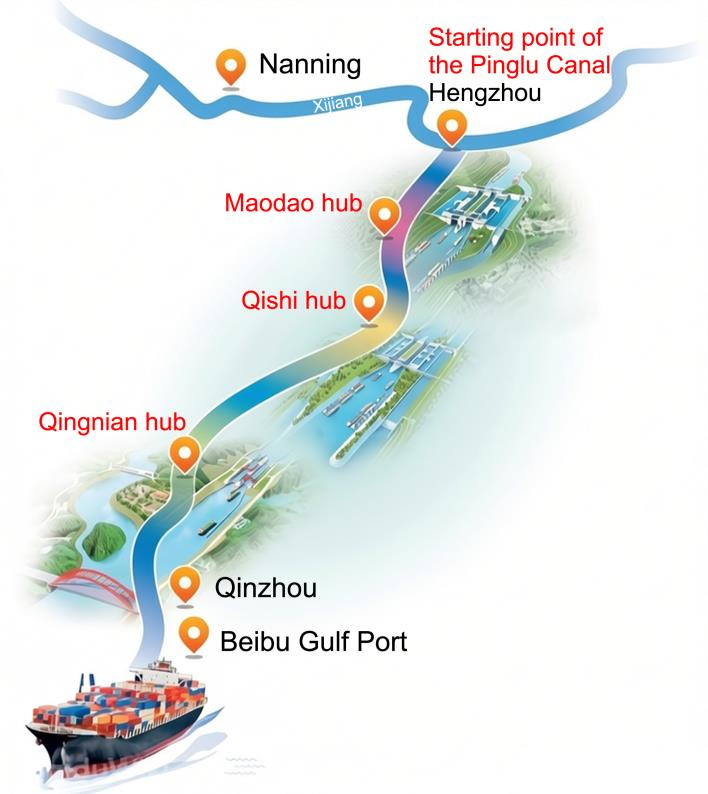
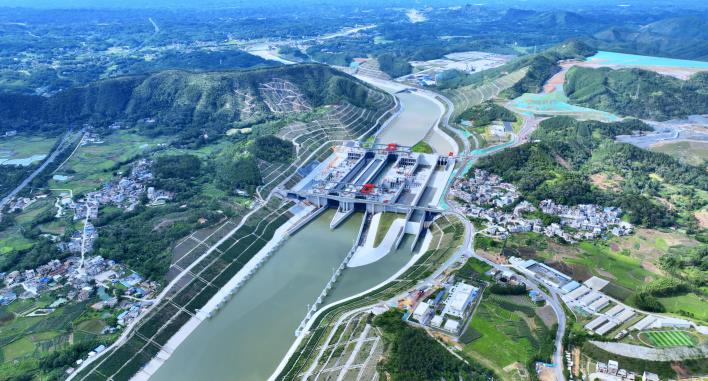
The morning itinerary focuses on the "dragon-head" project of the Pinglu Canal and its supporting infrastructure. It includes an on-site visit to the Madao Hub—the canal's "dragon head"—as well as an inspection tour of Guangxi's largest and most fully equipped comprehensive waterway service area. This provides an opportunity to observe both the strength behind the construction of this inland waterway corridor and the care embedded in its operational support.
Madao Hub of Pinglu Canal
A crucial component of the New International Land-Sea Trade Corridor, the Pinglu Canal is a monumental Chinese infrastructure project designed to enhance trade connectivity between China and the members of the Association of Southeast Asian Nations. The completion of the canal's full water filling represents a key step toward its planned opening for full navigation in September. The flagship project with an investment of $10.2 billion under China's strategy to develop the Guangxi Zhuang autonomous region and Yunnan province is a gateway to and for ASEAN. Stretching 134.2 kilometers from Nanning to Qinzhou Port facing the Beibu Gulf, the canal is the first direct river-to-sea canal project since the founding of the People's Republic of China. Connecting the upper reaches of the Xijiang River system directly to the sea, the canal provides a more cost-effective alternative route to the traditional, longer route via Guangdong province for vessels up to 5,000 tonnes. It is estimatedthat it will save 5.2 billion yuan ($753 million) a year in logistics costs.
Qinzhou Comprehensive Waterway Service Area
buildings, a shore-based bunkering and gas station for vessels, and an automobile fueling station. It is the largest and most fully equipped modern waterway service area in Guangxi. The facility features two 5,000-tonne-class bunkering and gas berths, three 5,000-tonne-class service berths, and one work vessel berth. Additionally, there are two double-banked berths for survey vessels or navigation aid vessels located at the corner section. The excavated harbor basin includes five 5,000-tonne-class berths designated for lock-waiting and emergency mooring. Upon completion, the service area will provide integrated functions such as shipping management, vessel berthing, environmental protection services, and material supply, offering comprehensive, high-quality services to passing vessels. It serves as a vital support facility to ensure the efficient operation of the Pinglu Canal.
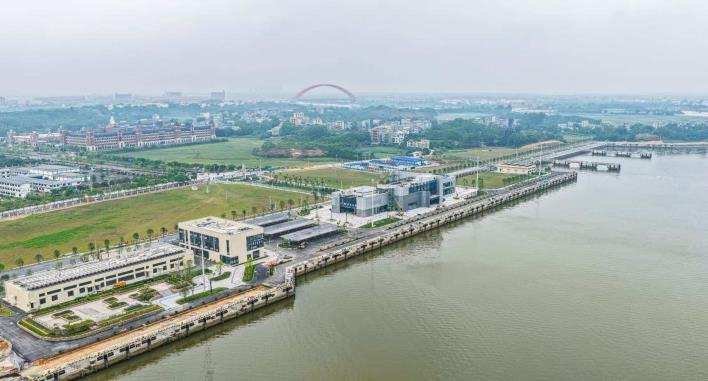
Qinzhou Comprehensive Waterway Service Area
The afternoon includes visits to the construction achievements of China’s first sea-rail intermodal automated container terminal and the open platform established under the China-Malaysia "Two Countries, Twin Parks" cooperation model.
Beibu Gulf Port Qinzhou Automated Container Terminal
The Beibu Gulf Port Qinzhou Automated Container Terminal is a significant project for the Guangxi Zhuang Autonomous Region, aimed at supporting the national strategy of the New Western Land-Sea Corridor. The development occurs in two phases. Phase I involves upgrading Berths No. 7 and No. 8 at the Dananping South Operation Zone of Qinzhou Port. This phase includes the construction of two fully automated container berths, each capable of handling 100,000 tonnes, with a combined quay length of 518.5 meters. These berths commenced operations on June 28, 2022. Phase II entails the construction of Berths No. 9 and No. 10, which will consist of two additional fully automated container berths capable of handling 200,000 tonnes, with a total quay length of 783 meters.
Equipment Control System (ECS), and a Gate Operating System (GOS), integrating technologies like artificial intelligence, big data, and cloud computing. This combination allows a high degree of informatization, standardization, and complete automation of operations, creating a smart port that is "intelligent, efficient, green, and convenient." It also establishes a replicable and scalable model known as the "Beibu Gulf Solution." Since 2025, the terminal has been operated by Guangxi Qinzhou Bonded Port Area Honggang Terminal Co., Ltd. This includes four operational berths (No. 7 through No. 10) and an additional five production berths that are leased out. Container throughput from 2023 to 2025 reached 905,000 TEUs, 1.656 million TEUs, and 2.259 million TEUs, respectively, displaying strong growth.To date, 40 domestic and international container shipping routes have been launched, including 26 foreign trade routes, one of which is an ocean-going route.
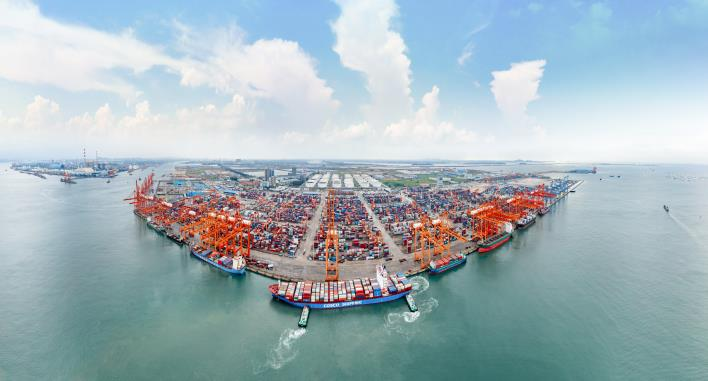
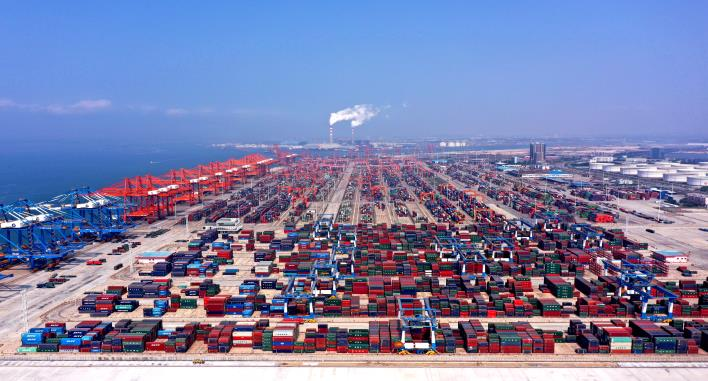
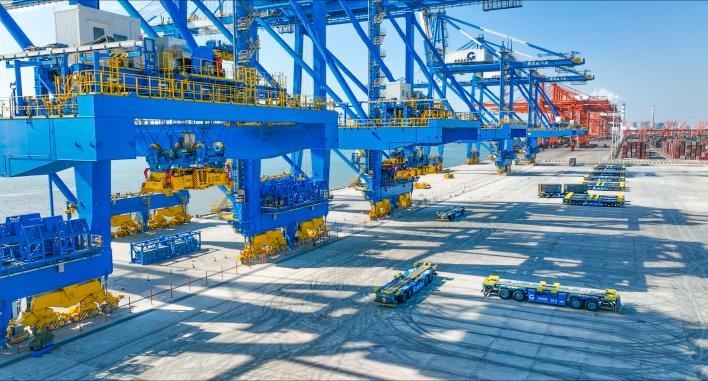
Beibu Gulf Port Qinzhou Automated Container Terminal
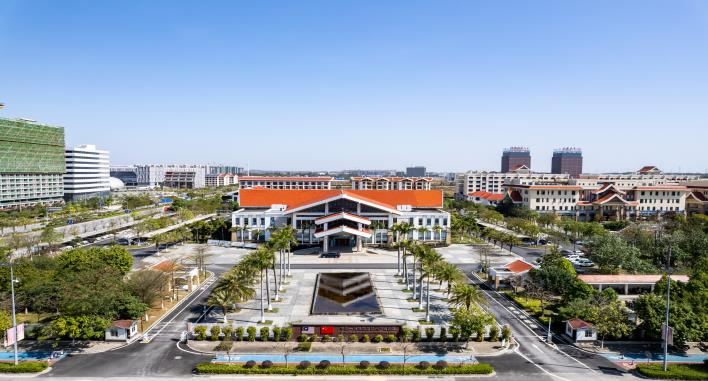
China-Malaysia Qinzhou Industrial Park
The China-Malaysia Qinzhou Industrial Park was established in March 2012 with the approval of the State Council. This industrial park oversees the integrated development of the China-Malaysia Qinzhou Industrial Park, the Qinzhou Port Area of the China (Guangxi) Pilot Free Trade Zone, and other industrial zones, covering a jurisdiction of 260 square kilometers adjacent to the port. The park aims to establish "One Port, Two Zones," serving as an international gateway port for the New Western Land-Sea Corridor, promoting a maritime economy cluster, and acting as a demonstration zone for China-ASEAN cooperation. The focus is on developing port and shipping logistics, international trade, green chemicals, and various other industries. From 2021 to 2025, the park's GDP grew at an average annual rate of 7.5%, while the gross industrial output value above the designated size increased by an average of 9.1% per year. During this period, total import and export trade surged at an impressive average annual rate of 35.6%. In 2025, the port's cargo throughput reached 230 million tonnes, and container throughput hit 7.462 million TEUs. Additionally, the New Western Land-Sea Corridor rail-sea intermodal trains completed 518,000 TEUs. Qinzhou Port ranks among the world's top 30 container ports and features 96 operational berths, 61 of which are designed for vessels of 10,000 tonnes and above. It is home to Guangxi's first 300,000-tonne-class oil terminal and China's first sea-rail intermodal automated container terminal. The port has opened 89 domestic and international shipping routes, connecting to 581 ports across 127 countries and regions worldwide. The park has attracted prominent enterprises such as CNPC and CSSC, with 13 major industrial projects, each worth over RMB 10 billion, settled in the area. During the 14th Five-Year Plan period, total investment exceeded RMB 260 billion, and the Qinzhou Petrochemical Industrial Park ranks 17th nationwide in comprehensive strength among chemical parks. A China-ASEAN bird's nest cross-border industrial chain has developed, and over 220 innovative institutional achievements have been made, 106 of which have been replicated and promoted across Guangxi. Moreover, the Beibu Gulf (Guangxi) Bulk Commodity Trading Platform has surpassed RMB 120 billion in cumulative transaction volume, establishing the park as a significant platform for China-Malaysia cooperation and engagement with ASEAN.
Preliminary Agenda
September 22: Registration
September 23: Opening Ceremony, Keynote Lectures, Invited Presentations, Parallel Sessions, Poster Sessions,
September 24: Keynote Lectures, Invited Presentations, Parallel Sessions, Poster Sessions, Closing Ceremony
September 25: Technical Visits
September 26: Departure




{{ 'en' == 'cn' ? item.name : item.name_en }}
{{ 'en' == 'cn' ? item.desc : item.desc_en }}